Who would have thunk it?
The state of Maine has an active seaweed industry that is hotly debated within the state. In fact, as recently as March 2019, a lawsuit over intertidal seaweed ownership went all the way to the Maine Supreme Court. Before the ruling, intertidal fish and plants were not “owned” by any private entity, meaning that harvesting the resource could take place on private property without permission. Escalations over the seaweed industry in Maine reflect global demands that have skyrocketed in recent years. New health and cosmetic products are being produced from seaweed, and it continues to be used for agricultural fertilizer. Meanwhile, conservationists and scientists alike point out that seaweeds contribute to important ecosystem services such as nutrient cycling and habitat availability for associated species. Given this natural resource conflict , the need to fully understand the impacts of seaweed removal on intertidal ecosystems is imperative.
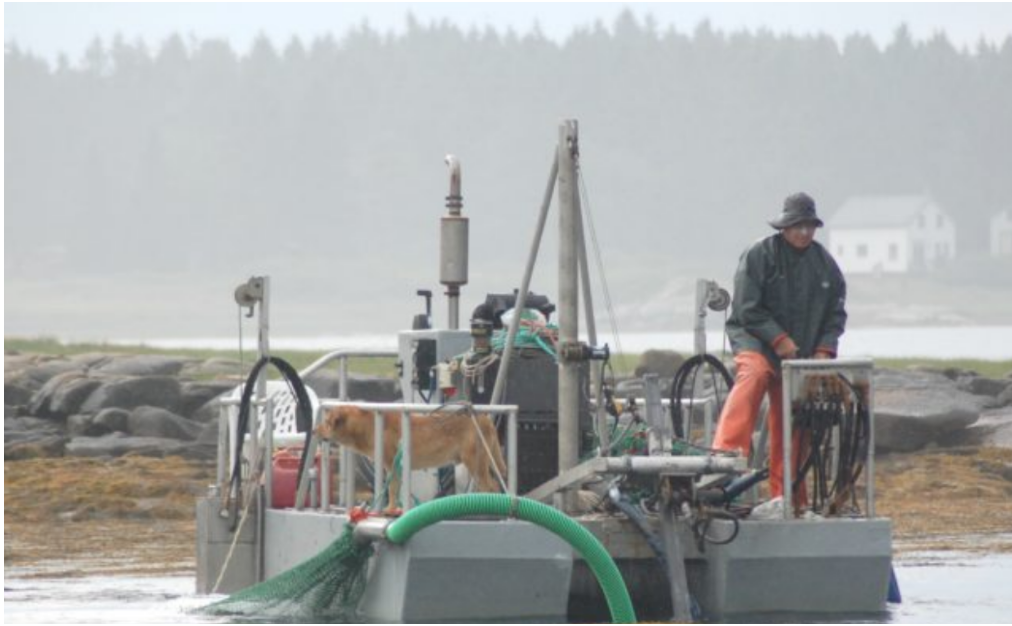
The most common macroalgae (technical term for seaweed) export from Maine is Ascophyllum nodosum, more commonly known as rockweed. Like other types of macroalgae, rockweed plays important roles during high and low tide. During high tide, air bladders enable Ascophyllum to float on the surface, creating a dense, vertical canopy. This canopy provides food and shelter for marine organisms.During low tide, the beds pile up on the rocks, which provides protection from desiccation for small invertebrates and amphibious fish.

Based on the current issue in Maine, and the unclear effects on intertidal dynamics following a harvest, the following research question will guide my investigation: Why does disturbance in A. nodosum beds change community dynamics? By following standardized industry practices as closely as I can, I will conduct an experiment that seeks to answer this question. By cutting patches of Ascophyllum down to 16”, I will take low tide temperature readings and species counts twice a day. Collecting data on temperature, species composition and biomass removal will reveal insights on how rockweed removal affects habitat dynamics of intertidal zones.

 Science, Exploration, and Life